AnTuTu Benchmark – what is it and what does it actually measure?


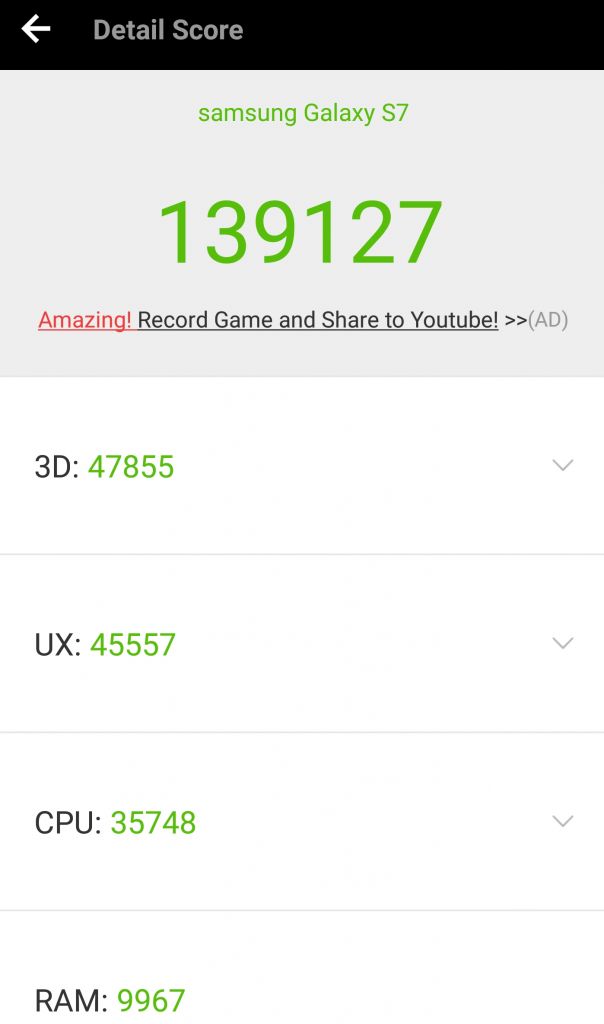
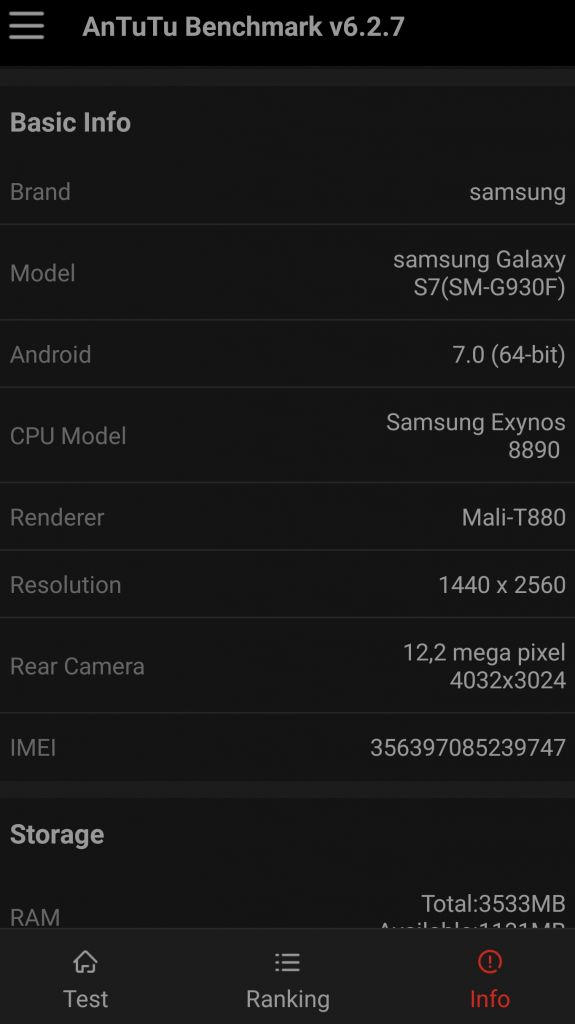
When we’re speaking about smartphones, we come across several important segments: design, display, camera, performances and price. Lately, together with the advancement of hardware, we put more and more emphasis on performances and the time needed to execute specific tasks. In order to rank these performances objectively, more and more “benchmark” applications are developed, and what these do is assign a number value to each device based on several artificial tests. One of these applications, very well-known and trustworthy, is the AnTuTu Benchmark. This is an application that tests several segments of a smartphone (CPU test, GPU test, UX test, RAM test) and assigns a number value to each, adding them all up to the final score – this final value is the score a smartphone reached. In fact, the number in and of itself doesn’t mean much, but it’s a great way of comparing two competitor devices or two devices of different platforms (for example iOS vs Android). Aside from simply testing the device, the AnTuTu benchmark offers a ranking list of all devices in regards to scores, as well as a list of hardware and software details of the device it runs on.

The AnTuTu scores are becoming more and more relevant, so today we can even see manufacturers advertising their new devices using AnTuTu scores – it is just a convenient way to show off a device’s performance. In the following few paragraphs, we will run through all testing segments, and try to explain how the AnTuTu test actually works.
UX (User Experience)

The first test tests performances of a device in its user interface (UI). This segment is split into two parts. The first part tests multitasking capabilities (simultaneous work of several applications), while the second part tests the time needed to execute (initialize) a specific operation, i.e. the time needed to open an application. As all other segments, this one also get its own score which goes into the final result.
RAM test
Of course, an integral part of all smartphones is RAM memory, and this is another testing segment of the AnTuTu Benchmark application. The first thing people in general think of, when they hear RAM, is the capacity, how much RAM there is, but this is not the only thing that counts. Today’s standard in terms of RAM memory is 4GB, but we’re seeing more and more devices with 8GB of RAM. However, next to the capacity, the AnTuTu tests the speeds of writing the data into the RAM and reading from it. These two speeds are crucial for the speed of the device overall – the greater the speeds, the faster the device. RAM memory is constantly used, whether you’re using the phone or not, and these speeds are very important for the smooth performance of the device. This segment also gets a score which goes into the final result.
The record, at the moment, is held by the OnePlus 5 which has 8GB of LPDDR4X ultrafast RAM.
CPU test (Central Processing Unit, the processor)
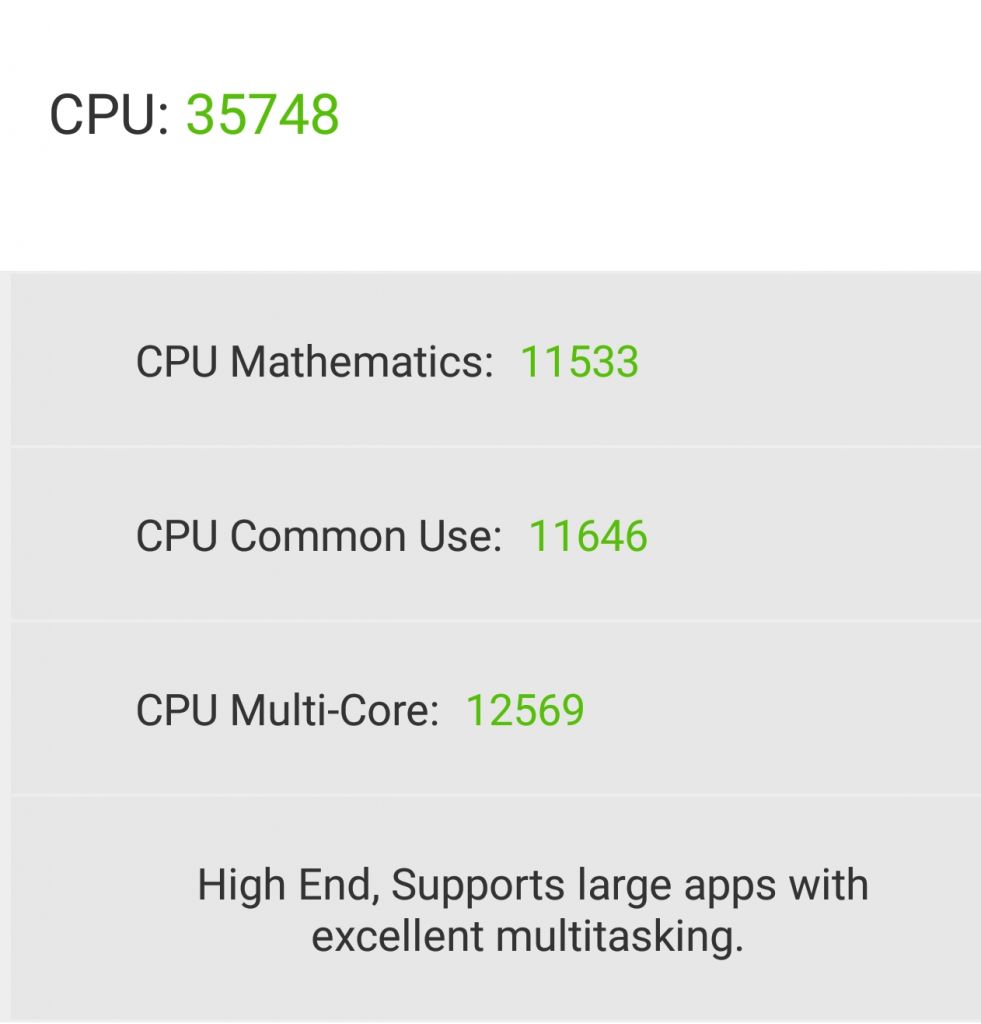
Little by little, we come to the main test, the one which tests the capabilities of the CPU. Faster processor is capable of faster execution of tasks and applications, which means that the device itself is faster – simple as that! In general, the AnTuTu Benchmark “likes” a lot of cores and high clock speeds. An octacore CPU clocked at 1.6 GHz will score more multitasking or render points compared to a quadcore CPU clocked at 1.3 GHz. Faster processor usually brings better performances in high demanding 3D games. The AnTuTu Benchmark measures two separate things: CPU Integer and CPU Float-point. Both of these are relevant indicators of the CPU capabilities.

GPU (Graphics Processing Unit)
The GPU serves to perform all graphically intensive operations. For example, when you’re playing a game on your smartphone, the GPU is there is order to render the 3D effect, or to enhance the 2D effect. Many screen transitions and animations of the OS itself are executed by the GPU. The CPU itself is, in fact, capable of doing all these tasks, but it would need much more time and energy to do so. The AnTuTu Benchmark tests the 3D capabilities of the graphics chips through very high demanding preset graphic scenes. For each scene, the AnTuTu gives a corresponding score based on the performances.
I/O performances
The last test measures the speeds of writing to and reading from the internal storage memory of the device. Just to make things clear, this is not RAM memory test, but rather storage memory – the memory that you use in order to save your data (photos, videos, music, settings etc.) for a longer time. Your device does this reading and writing constantly, which means that the faster this memory is, the faster the device performs. This segment also gets its own score.

Of course, all this has to be taken with a grain of salt, especially when you take into account the “silent war” for supremacy lead by the leading manufacturers. The fact is that Apple, each year in September, sets the benchmark bar very high, thanks to very powerful chipsets and low resolution displays, both of which are crucial conditions for top performances. Also, newer Android versions can bring improvements, so the final results are never fixed.
At this moment, in the Android world, the record is held by: the OnePlus 5 (the 8GB RAM version), but in general, the iPhone X is ahead of all competition with the score of over 230 000 points.
How much did your device score on the AnTuTu Benchmark? Write your scores in the comment section!
In order to download the AnTuTu application on your Android device, visit these links : AnTuTu and AnTuTu 3D Add-on.
In order to download the AnTuTu application for the iOS, visit this link: AnTuTu iOS