iPhone X vs. Note 8 – Who’s the king of photography?

1. Introduction
Smartphones have become an integral part of our everyday lives. It is very hard to imagine how people would manage their day-to-day chores without one such handy device that is always at their disposal. Whether one wants to be in touch with other people, thoroughly plan their days, or simply snap a photo or two every once in a while, smartphones are capable of all this, and they do it all in the palm of the hand. Speaking of snapping photos, we’d wish to argue that the Apple iPhone X, as a representative of everything Apple have to offer, can take better photos than the Samsung Galaxy Note8, which is highly regarded as the best smartphone Samsung, and, for that matter, anyone from the Android world, has to offer. We will try not to go too much in depth here regarding technical specifications, but rather focus on the end product. This will, however, not be an easy task, since, as we’ve already said, these two devices are the best each of the worlds have to offer. However, one of them has to claim the title of the champion, and we will try to decide which one takes the crown.
2. Similarities
While these two devices do have some things in common, here are some facts that need to be pointed out in order to understand the main differences between them.
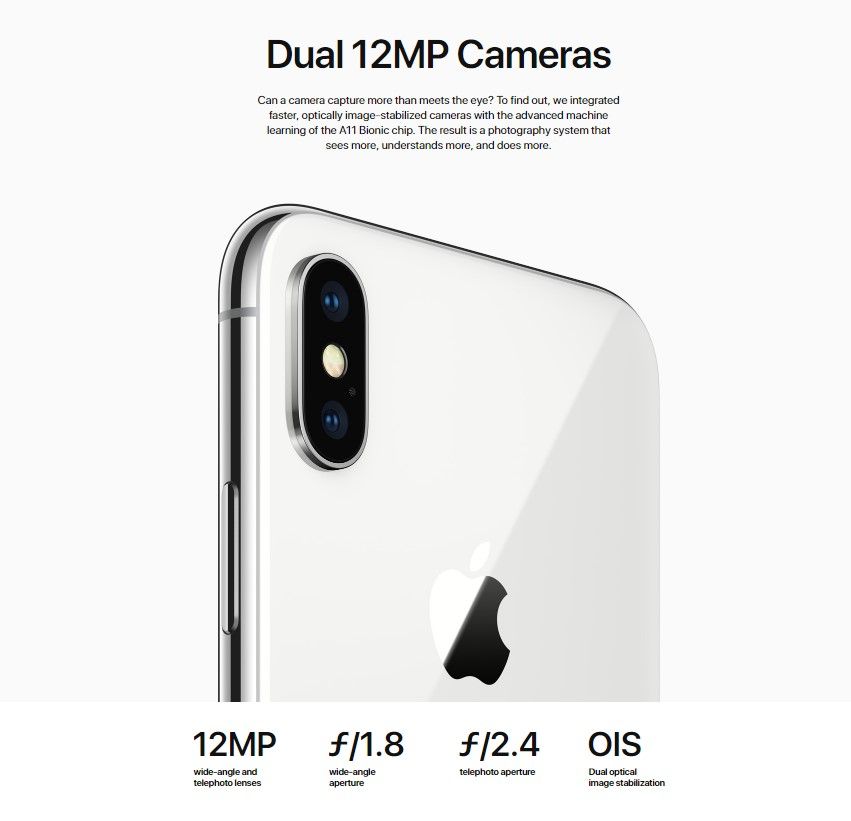
First of all, it is, strictly speaking, it would be incorrect to say that these two devices have only one main camera each. A more precise description would be to say that they have a single main “camera setup” each, both of them consisted of two separate camera sensors. This will be important later, because when we use the term “camera”, by it we will actually be referring to the “camera setup”. Second of all, all sensors have the same resolution – 12 megapixels. Both devices’ cameras are backed by an LED flash that helps take better photos in low light shooting conditions. Furthermore, both devices store their photos in the same photo format, which means that it is easy to import all of them into a suitable software in order to manipulate them. There are many more similarities, but we do not want to focus on those. Let’s try to make a distinct difference between the two in order to produce a winner of this race.
3. Apple iPhone X – What can it do?
Let’s start with the advantages of the iPhone X’s camera.
This camera has the best Bokeh effect implementation ever seen in a smartphone. This has been backed by numerous photos that are already out on the internet. Comparing these photos to those made by any other smartphone yields an impression that the Bokeh is just better on the iPhone X. When taking portrait photos, the object becomes more pronounced and perfectly clear, while the background is blurred putting even more focus on the object of the photo. The edges of the object are perfectly sharp, which signifies that the Bokeh effect is not executed through software, but rather hardware means. This could not be done if the setup had only one camera sensor.

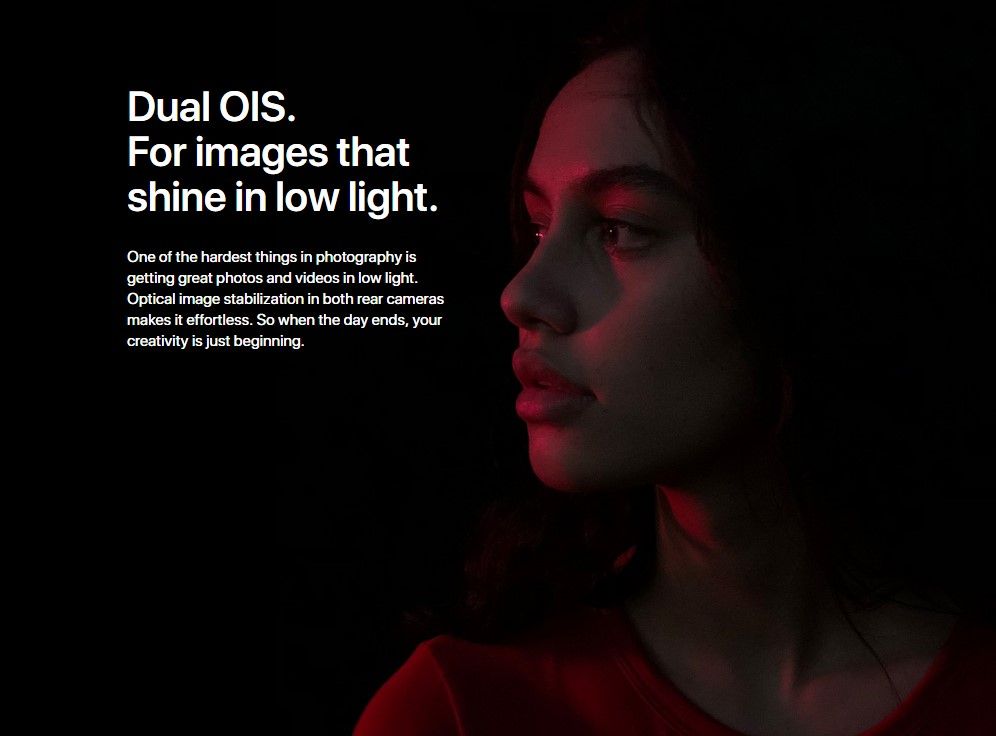
Furthermore, speaking of portrait photos, the iPhone X also has new Portrait Photo Lighting effects. There are five new modes: Natural Light, Studio Light, Contour Light, Stage Light and Stage Light Mono. These modes cannot be found on any other device. Natural Light makes the light look softer and dimmer, which makes photos look more natural. Studio Light sprays even light on the object of the photo, supplementing perhaps less than great lighting of the scene. Contour Light adds shadows to the face of the person portrayed, making the photo look as if it had been manipulated by a professional, whereas, in fact, it hadn’t been. Stage Light does a phenomenal job – instead of blurring the background behind the object, it converts the background to black, so that the person portrayed looks as if they were in the spotlight, on stage. These photos look stunning. Lastly, Stage Light Mono does exactly the same, but it turns the whole photo black-and-white, meaning that the face of the person portrayed turns black-and-white, while the background remains fully black. This gives the photo a classic look, and makes it look simply incredible. These modes all do extraordinary jobs and they really enhance photos in an amazing way with no third party software required.

Another thing that is new, and never before seen in any device, is the High Efficiency shooting mode. What this mode does is quite remarkable. When shooting photos in this mode, photos are stored in the new HEIF (High Efficiency Image Format). Stored in this way, photos do not lose any quality, while reducing the memory needed to store them by up to 50%, making it possible to take more excellent photos. High Efficiency mode is something people who enjoy taking photos will be very happy to have. Sometimes people want to take “snap” photos of one particular moment (for example, take mid-jump photos). This feature has been improved in the iPhone X’s camera. The shutter speed is now reduced to only one quarter of a second, which is incredibly fast. These photos will now look spectacular, and moments like this can be safely stored forever.
Last but not least, as far as photos are concerned, is the all new Panorama mode, which lets users take very high resolution panoramic shots. This mode will let users capture photos up to 63 megapixels, which means that if you choose to have these photos printed out, they will still be very sharp. Printing used to be a general problem of panoramic shots, as they tended to be not as sharp, but Apple managed to fix that issue, and now the iPhone X provides really excellent panorama photos.
Now, on to videos, another integral part of any camera. There are three new features, something that no other camera on the market can offer.
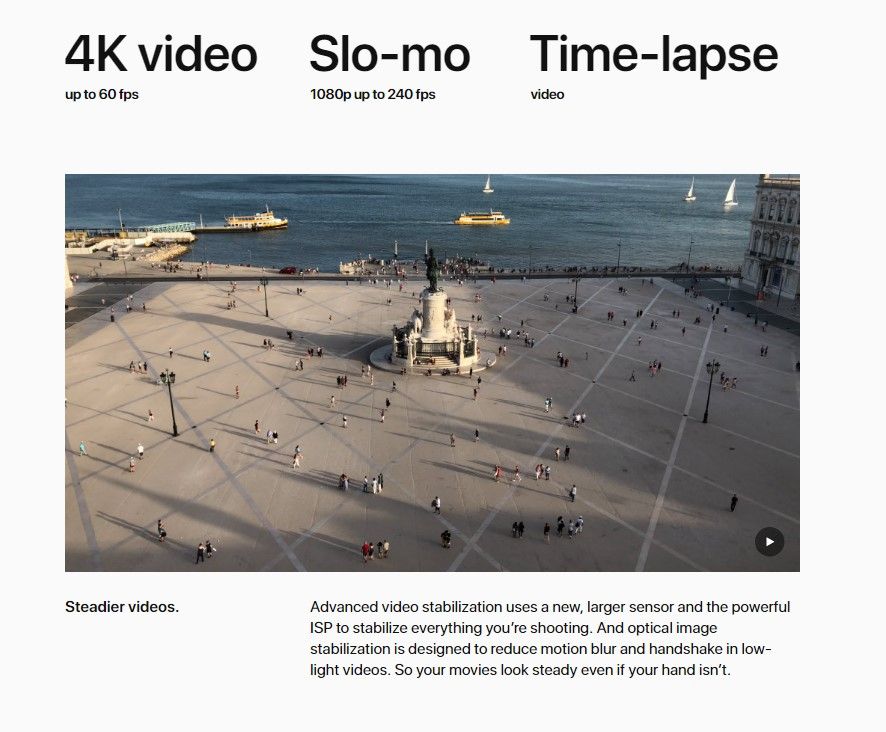
The first new feature is the 4K 60fps (frames per second) video capability. This resolution (4K – 3840 x 2160 pixels) is becoming more and more spread out across bigger screens (TVs, computer monitors, etc.) In order not to lose quality due to lower resolution material being reproduced on a larger screen, higher resolution material needs to be made. This is exactly what the iPhone X now provides, very high resolution videos at an amazing framerate, which means that the 4K videos taken by the iPhone X are very smooth, there is no noticeable lag, and due to the high resolution, they look magnificent, with a very high level of details.

The second new feature implemented into the iPhone X’s camera is the Full HD (1080 pixels) slow-motion capability at the framerate of 240fps. This simply means that slow-motion videos are, again, crystal clear and silky smooth, even when slowed down by up to four times. These videos are excellent in various situations – only sky is the limit to the creativity involved. These videos are the smoothest and most fluid slow-motion videos offered by any smartphone at the moment.
Finally, and akin to HEIF for photos, Apple implemented HEVC (High Efficiency Video Coding) in the iPhone X. All of these videos (slow-motion, 4K at 60fps, etc.) demand lots and lots of storage memory, and this is something iPhones in general are infamous for – users end up lacking memory very quickly. Using this type of coding, videos are reduced, memory-wise, by up to 50%, which, again, means that users are able to take up to two times more videos of outstanding quality. But, of course, nothing man-made is perfect, so even this camera has its drawbacks, however minor they may seem. First of all, some users report that this camera is simply too good, which makes them highly self-conscious. It is so powerful that it can pick some very minor imperfections all people seem to have. For this reason, people tend not to take photos with this camera. It just makes them feel insecure.
Another flaw of this camera is hardware-based. The new iPhone X is made fully out of glass – including the camera, which has glass-covered lenses. However, as the camera protrudes out of the back the device, this makes the glass prone to scratching over time. Users tend to put the device down on its back, and since the back is uneven, the glass is on the frontline of scratch marks.
4. Samsung Galaxy Note8 – What can it do?
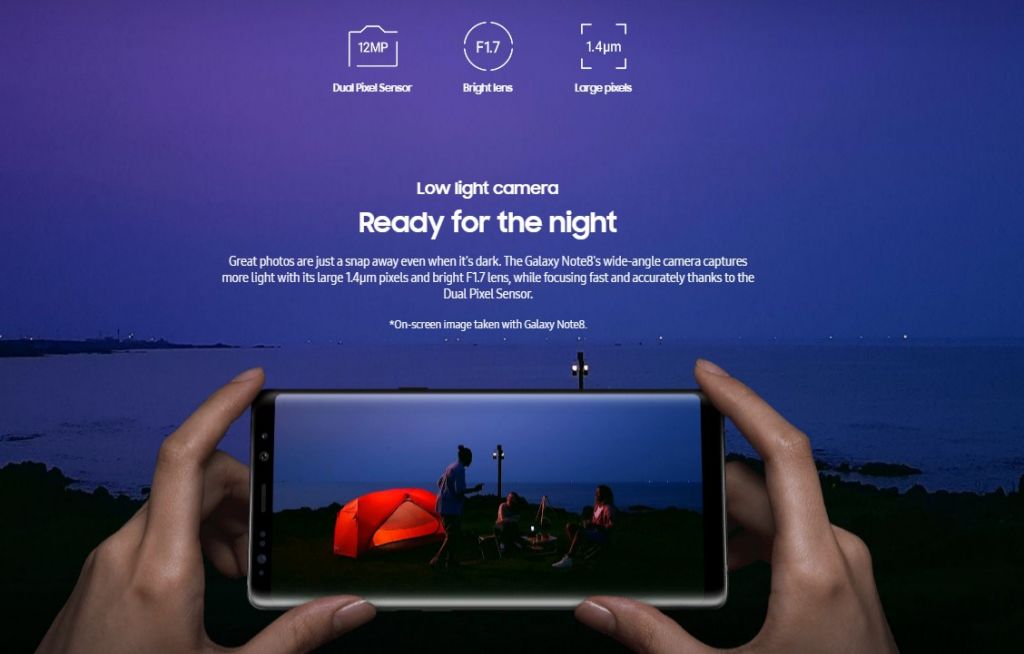
Undoubtedly, the Note8 is an amazing device. In fact, it is the best device that the Android world (smartphones that use Android as their operating system) has to offer at this moment. This makes it a perfect sparring partner for the iPhone X. We will now list things that make the Note8’s camera the best there is at the moment. When it comes to scenes with a lot of bright colors, the Note8 is just – excellent. It provides very clear and sharp photos, nicely saturated and extremely precise. Colors are vivid, and black color reproduction is simply amazing. Blacks are deep, and very nice to the eye. The photos taken by the Note8 are also very sharp, edge to edge. The noise levels are kept on a very low level, meaning that the details are highly pronounced. Another great thing, speaking of sharpness, is the level of details in shadows. The parts of the image which are in shadows are usually not very sharp due to the lack of lighting in these specific areas. The Note8’s camera does an excellent job of portraying details in these areas. Photos look stunning in general, and even when printed out, they look amazing. The aperture of the camera is f/1.7. This means is that the lens lets plenty of light reach the camera sensor, which is a prerequisite for taking good photos. More light on the sensor means brighter and clearer photos. What goes hand in hand with the aperture, in term of bright photos, is the shutter speed. The longer the sensor is exposed to the light source, the better the photos are. The Note8 lets users adjust the shutter speed as they wish, meaning that users can manually adjust how much time they want the sensor to be exposed to the light source. These two features combined provide outstanding photos even in low light environments. Sometimes, when taking photos, users find themselves switching from object to object. This means that the focal point of the photo changes, and as it changes, the auto-focus system has to readjust to the new object. The Note8 does this very quickly. Because of the tremendous speed of the auto-focus, it is very easy to switch between different objects while still having excellent image quality.

Last but definitely not least is the Pro mode of the Note8’s camera interface. In this mode, users are allowed to manually adjust all image parameters, akin to taking photos with a professional camera. White balance, exposure, shutter speed, all of this is manually adjustable. This means that users do not have to depend on preset parameters, which sometimes may provide settings that the users are unhappy with. The Pro mode allows users to play with the camera as they wish in order to take the best photos possible. However, the Note8 also comes with some disadvantages, and here they are. In bright scenes, the HDR sometimes “overdoes” its job, which means that some parts of the photo lose their quality. This is especially noticeable in high contrast scenes, for example, when taking photos of dark buildings on a sunny day. Either the building becomes too dark, which means that the photo loses some details in those places, or the sky will turn white, which means that the photo loses the ambience for the building. Either way, the HDR cannot balance between the two, so users will have to choose which aspect they wish to sacrifice.
Unlike the iPhone X, which uses the HEIF format, the Note8 uses the standard JPEG photo format. What this means is that photos are very large in terms of the memory needed to store them. As a result, users are forced to either take less photos altogether or to use a microSD card in order to increase the storage capacity, but this also comes with a trade-off – external storage drives, such as microSD cards, can be quite pricey, of course, if they have big capacity and operate at high speeds, which is the least this device deserves.
Finally, the video performance of the Note8 is altogether weaker compared to that of the iPhone X. Speaking of, for example, 4K videos, the Note8 can only shoot videos at 30 fps, while the iPhone takes these videos at double the framerate. This means that the videos shot by the Note8 are simply less fluid. Same thing can be said of slow-motion videos – the Note8 can only take HD (720 pixels) videos at 240 frames per second, while the iPhone does this in FullHD (1080 pixels) resolution. This, unlike high resolution videos, does not mean that the Note8’s videos are not fluid, but rather that they are of lesser quality altogether.
5. Final verdict
First things first, we must say that both of these devices are amazing in terms of camera performance. These are the best smartphone cameras available on the market at this moment, and whichever the user chooses, they will not be disappointed. However, since this is a sort of a competition after all, there must be a winner. In our opinion, the winner is, without any doubt – the iPhone X. Let us elaborate. The camera is simply astonishing. It provides such detailed photos and videos that they can easily be mistaken for ones made by a professional camera. High resolution photos and videos of amazing quality is something that not every camera can do. High efficiency mode allows the user to take extraordinary amounts of both. Also, the Photo Lighting mode provides effects never before seen on a smartphone. These effects were previously only possible through high-end photo editing software, but now users have all of these at their fingertips. Simply, the reported disadvantage of photos being too good speaks for itself – the photos are indeed marvelous. There is no existing smartphone camera on the market right now that is better than the one implemented into the iPhone X.