Introduction
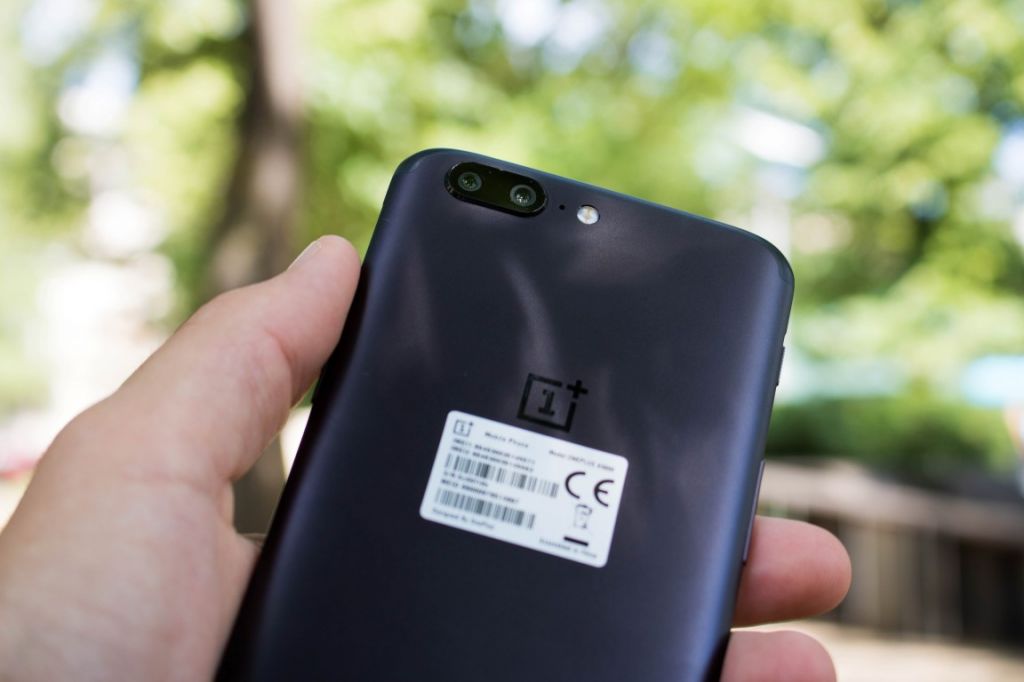
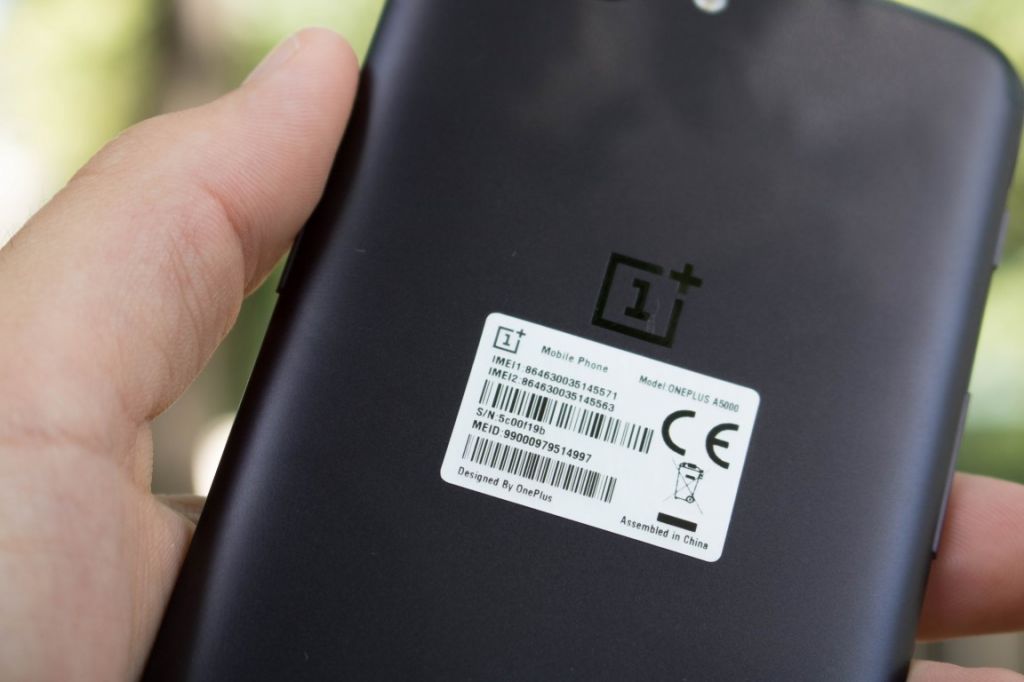
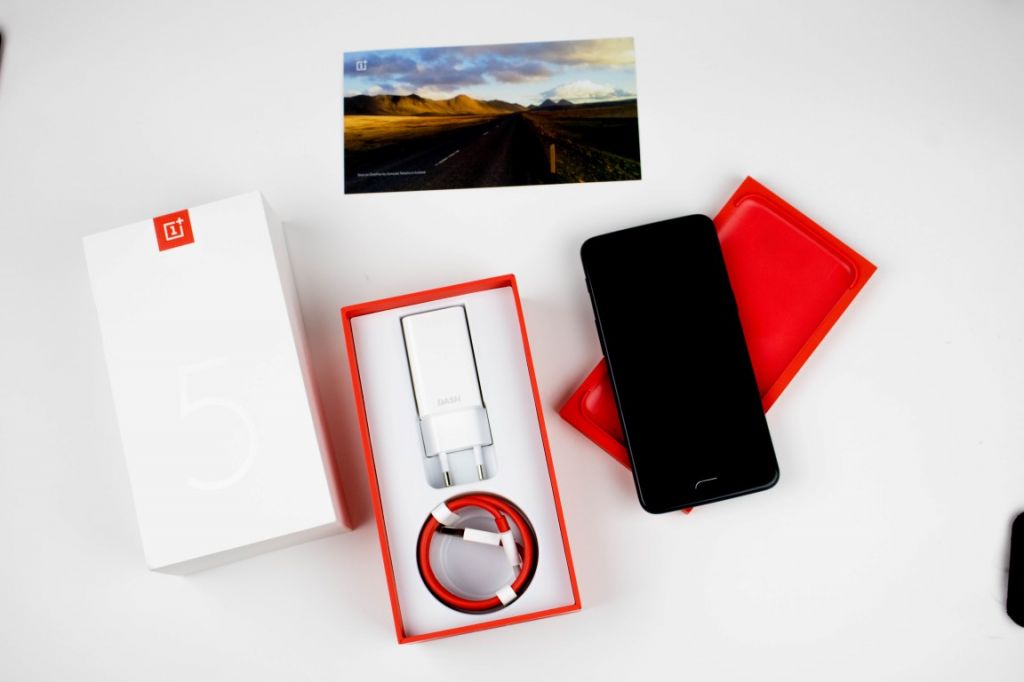
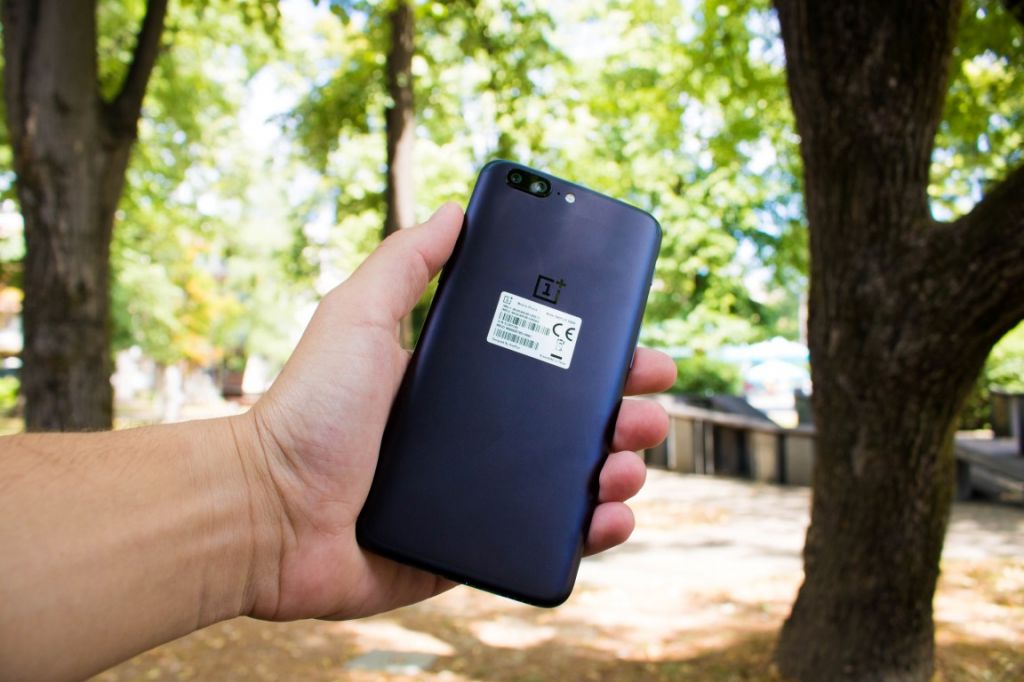
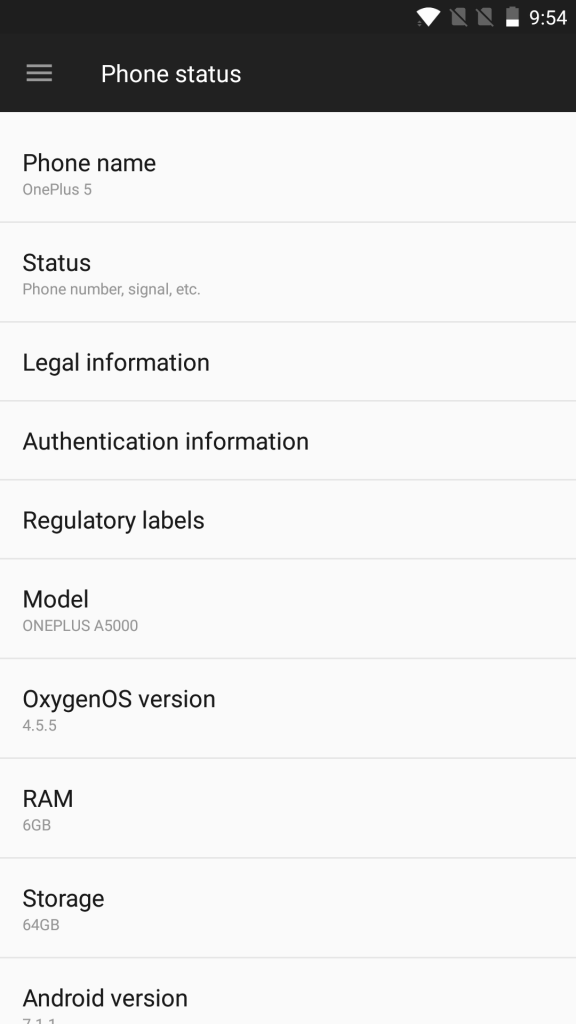
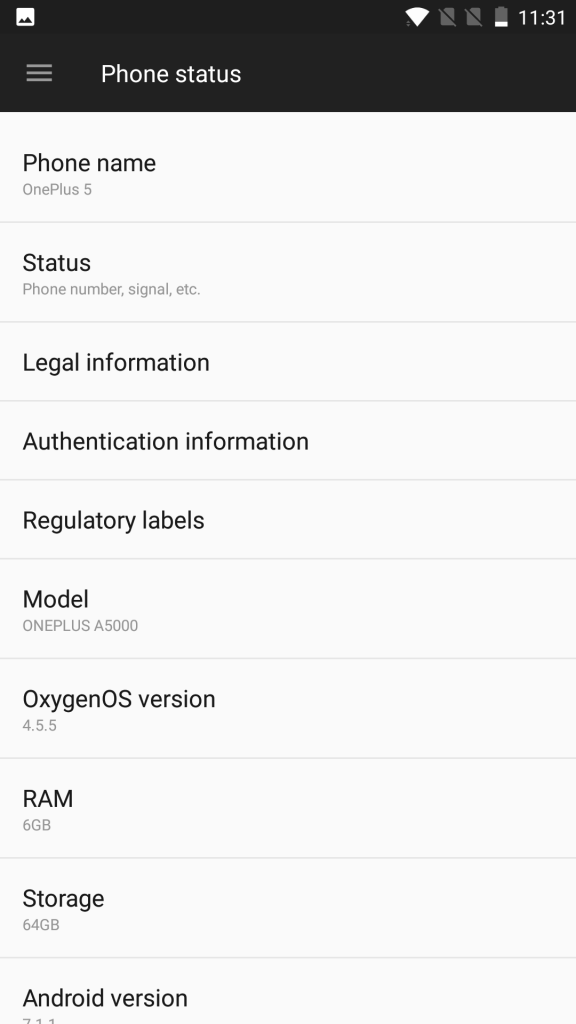
After very successful representatives, the OnePlus 3 and the OnePlus 3T, OnePlus has decided to skip the number 4 (because of a traditional Chinese belief that the number 4 signifies bad luck), and announce the – OnePlus 5. This is a high performance device which, for the first time, brings 8GB of RAM into the Android world (combined with 128GB of storage). Next to 8GB of RAM, one of the key selling points of the new OnePlus is its dual rear facing camera, which is there, as shown on the website, in order to bring a cleaner picture – but more about that a little bit later. Alongside all of the news, we’ll list out the contents of the factory box: a OnePlus quick charging adapter, a Type-C USB cable, a photo made by the dual rear facing camera of the OnePlus 5, user manuals and a SIM tray tool. This device ships out in two memory versions: 6/64GB and 8/128GB. There are two color options: Slate Grey (6/64) and Midnight Black (8/128). We will “hang out” a little with the Slate Grey version, so stick around to see what the OnePlus brought us this time.

Unboxing
Display
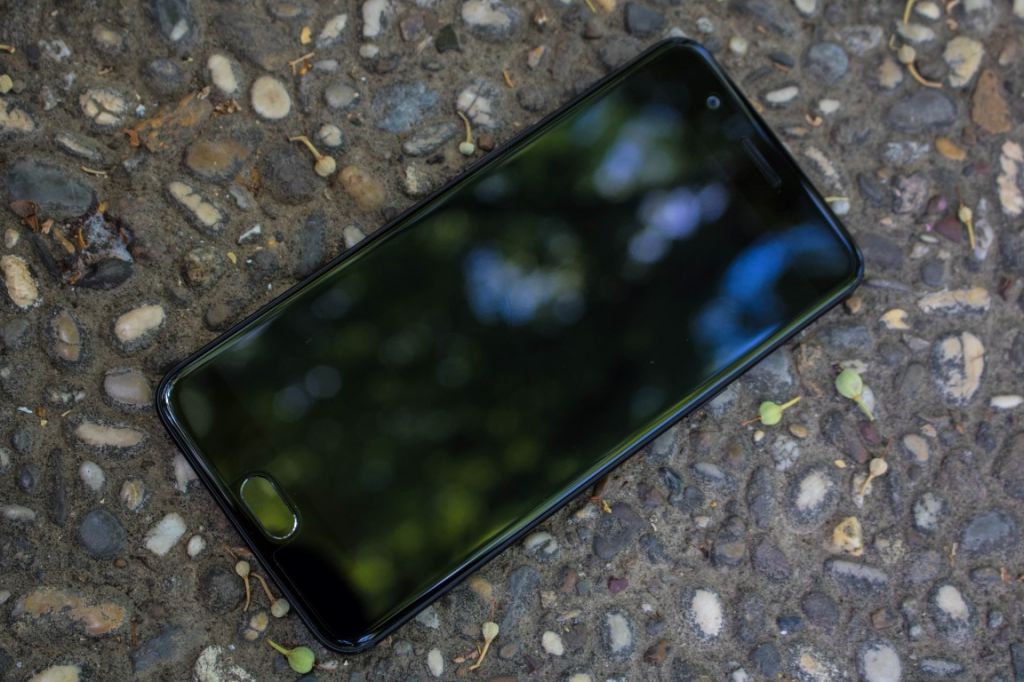
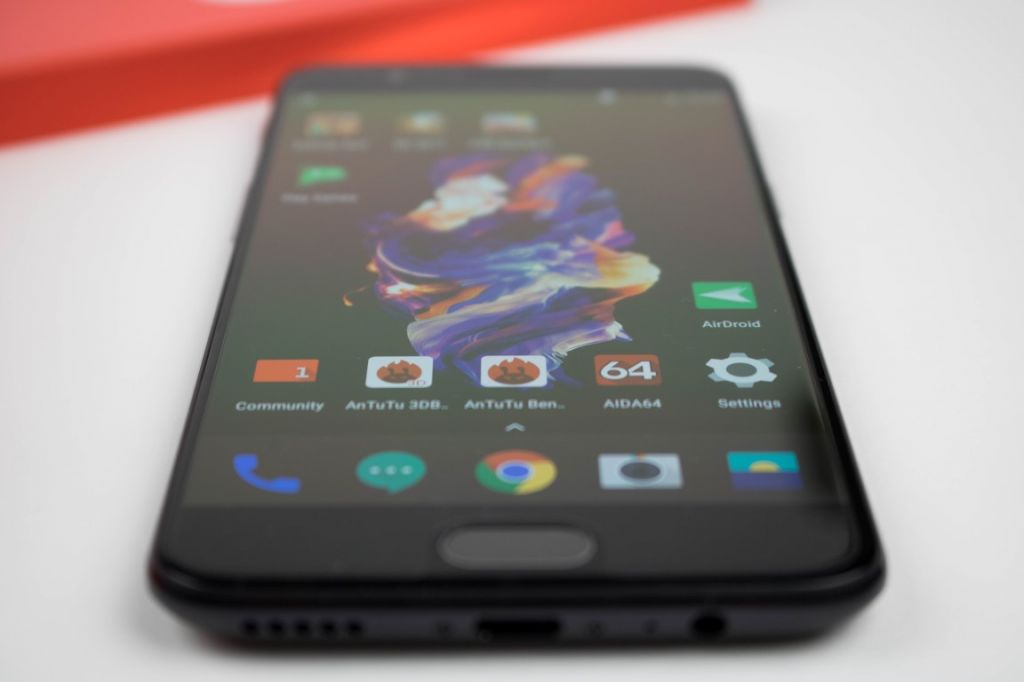
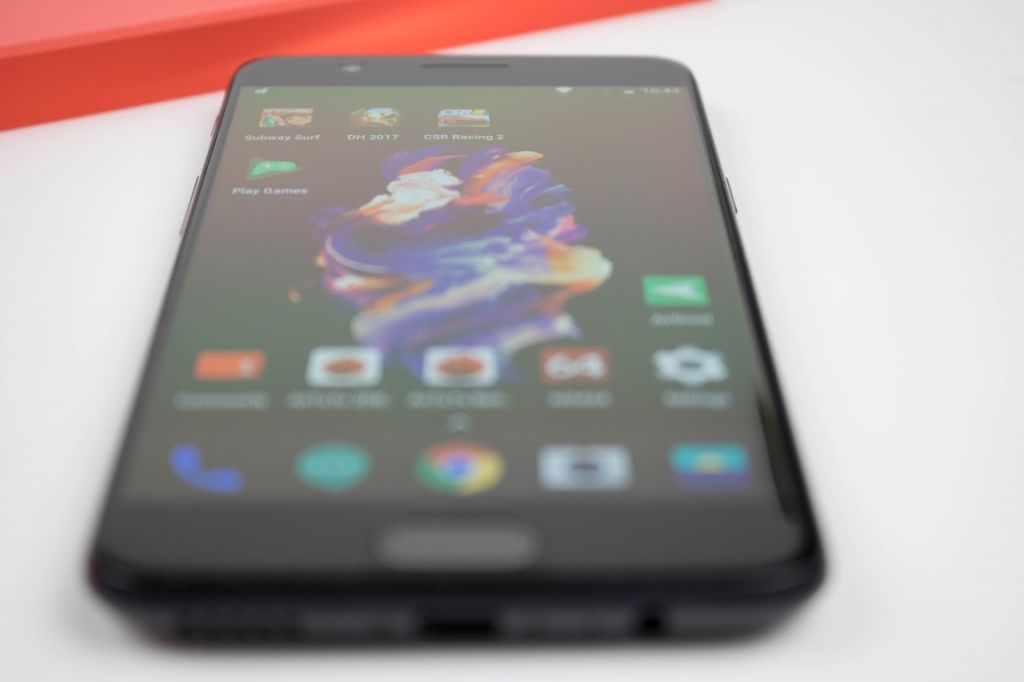
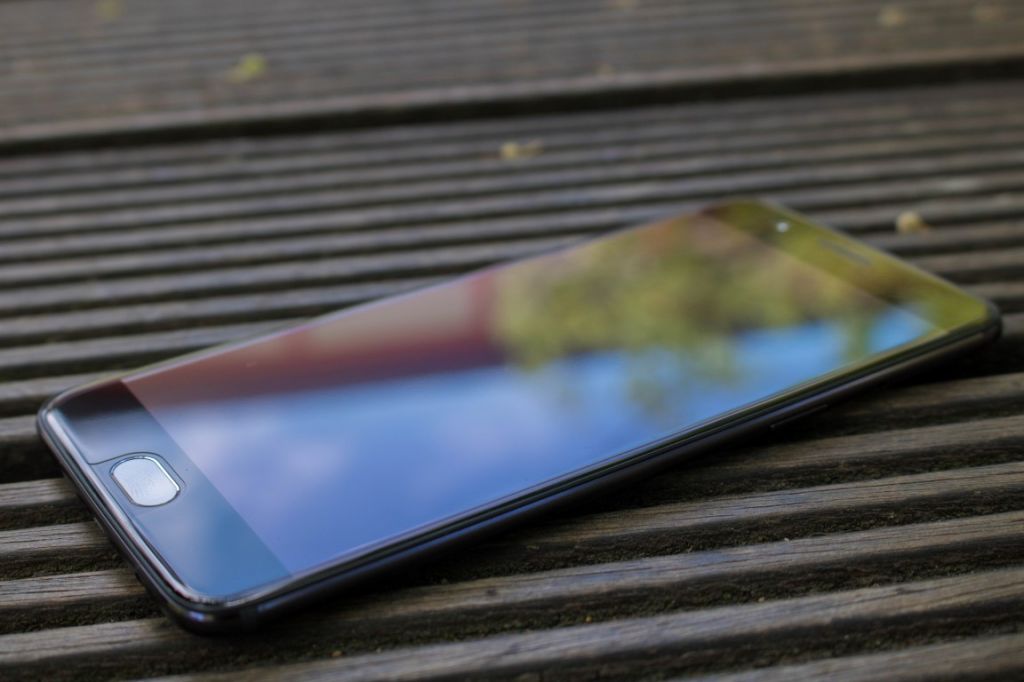
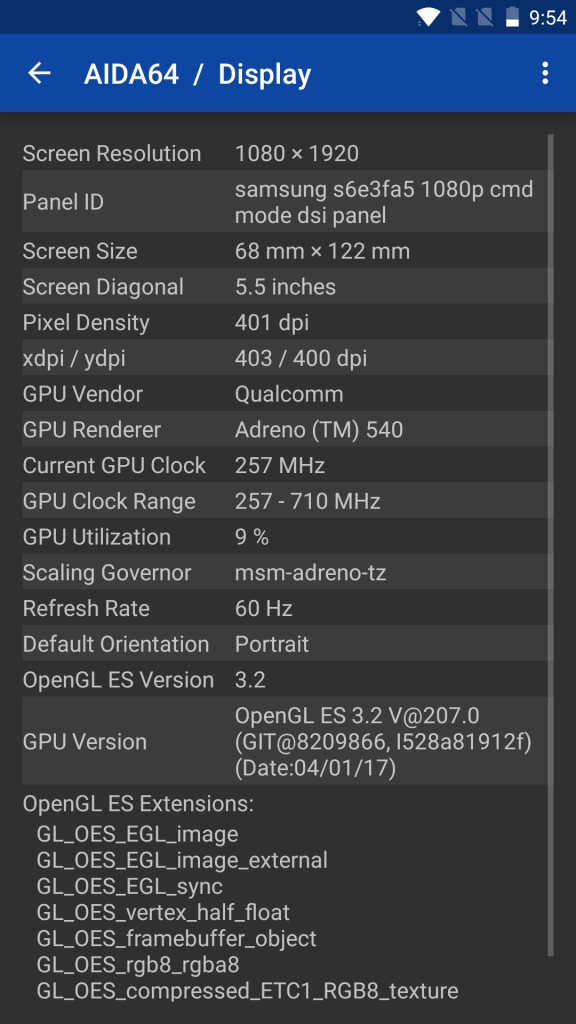
The thing that has remained the same compared to the predecessor is the display. It is a well-known OpticAMOLED panel, with a 5.5” diagonal. It can show up to 16 million colors. The resolution has remained FullHD, which, alongside the more powerful hardware, guarantees unprecedented “gaming” performances. The number of PPI is identical to the one on models 3/3T – 401. The thing that could definitely be improved is the maximum brightness level, which isn’t on par with other AMOLED panels. The display is definitely up to the challenge, although it doesn’t offer QHD or 4K resolution, which have already became standard for premium class devices. Colors are very nicely reproduced, the sharpness is great and visibility of the sunlight is excellent. Black colors are also amazingly reproduced due to the AMOLED panel. The aspect ratio has remained the same, meaning that the form factor is also the same. It is worth to mention that this time, Corning Gorilla Glass 5 protection was used in order to protect the display.
Hardware and OS
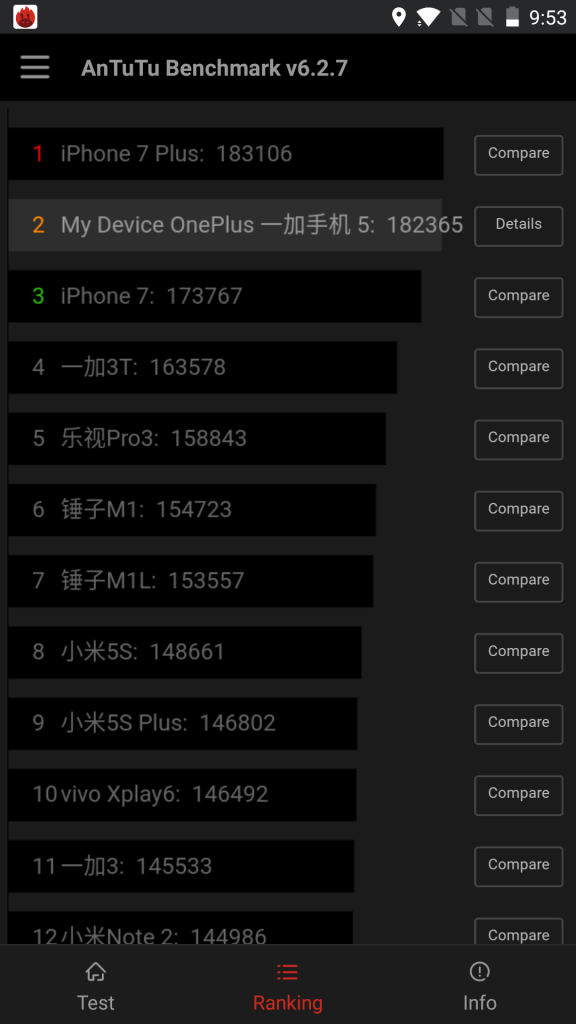
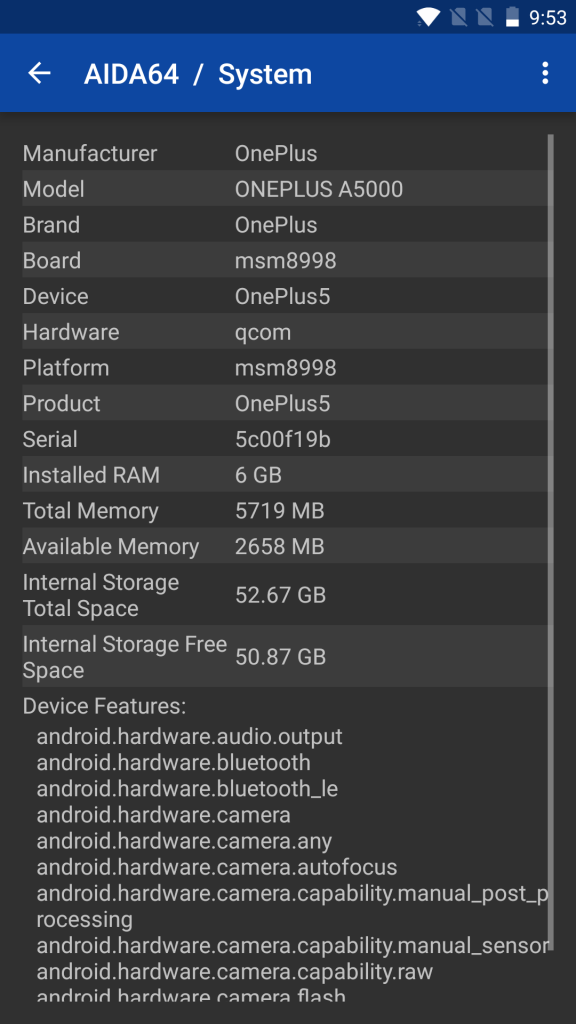
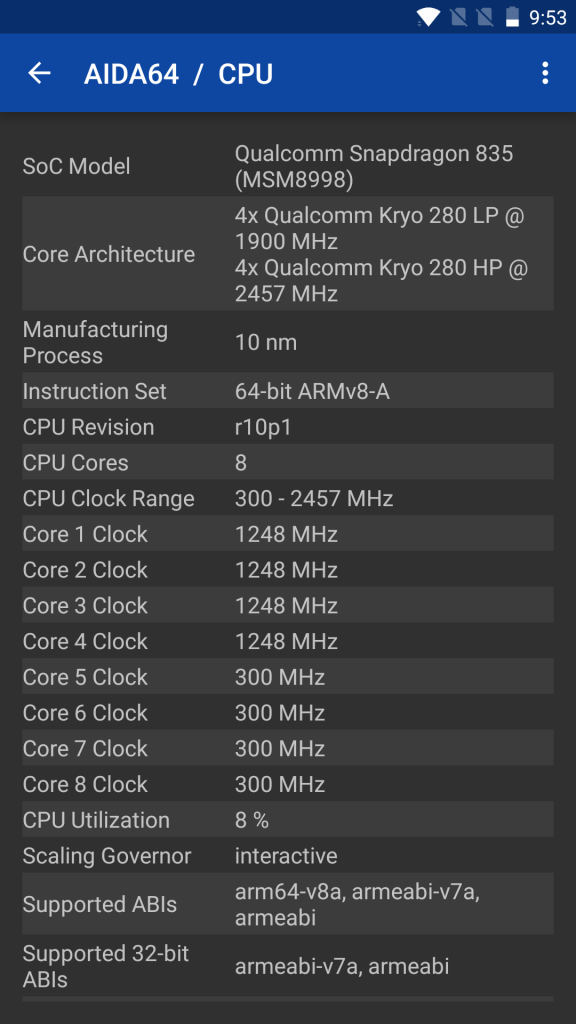
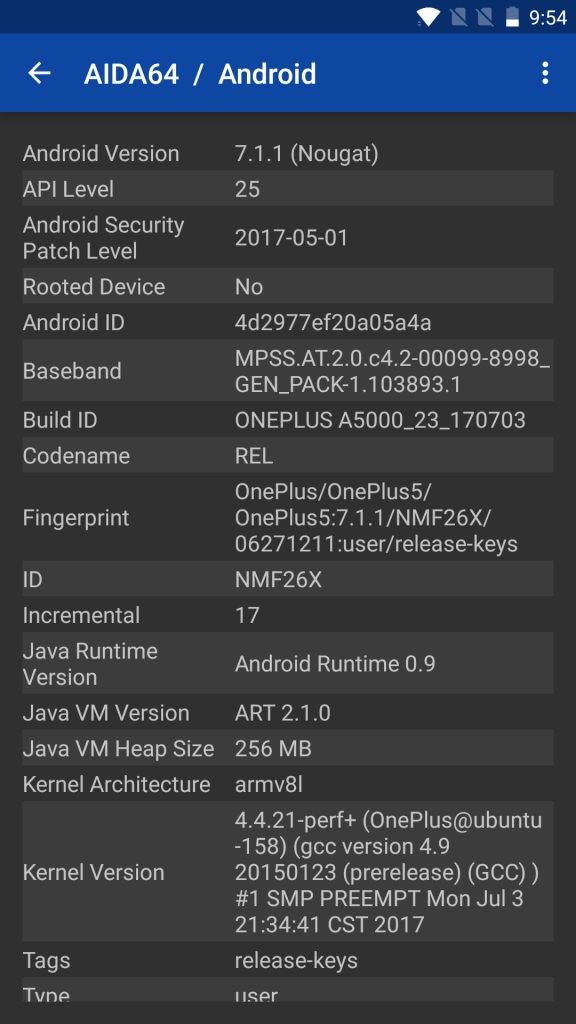
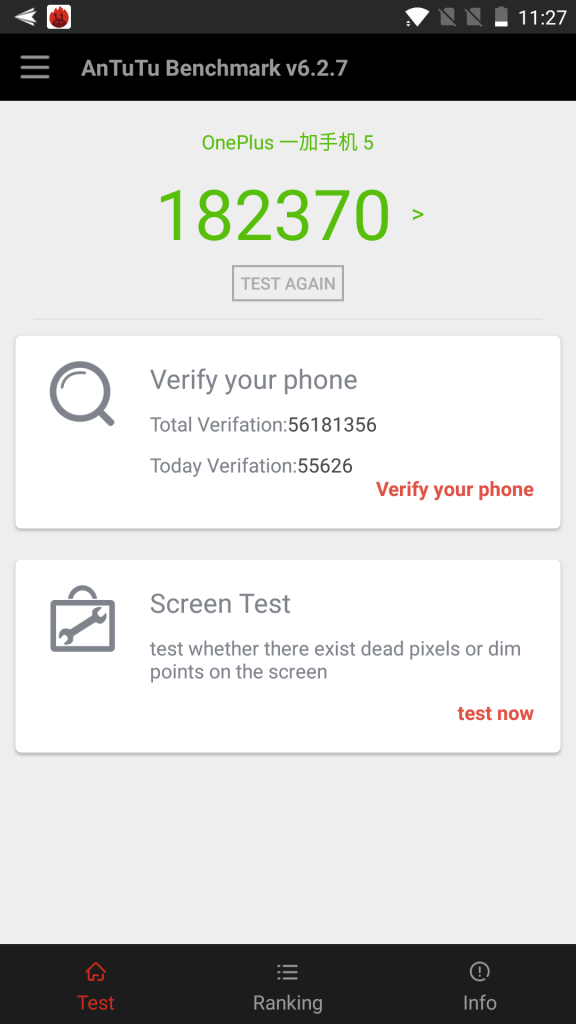
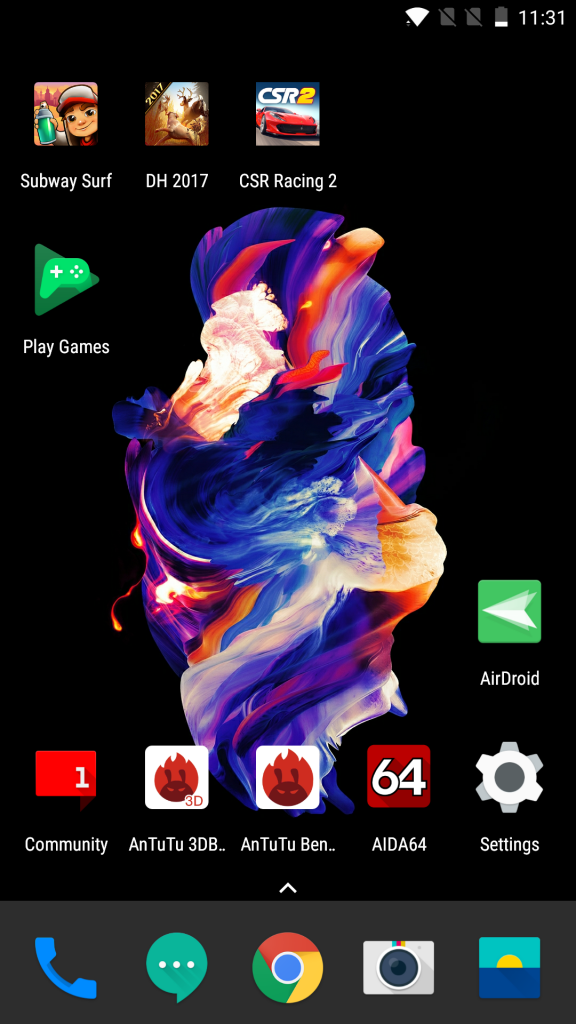
Slowly but surely, we have reached the most important thing in any OnePlus device, and that is something that hides “under the hood”. This time as well, OnePlus left nothing uncovered. The newest Qualcomm Snapdragon 835 SoC has been used in this device, combined with 8GB of RAM (in a 128GB storage version, otherwise RAM is at 6GB). This chipset represents the best there is right now on the mobile device market. Built in a 10nm process, it guarantees longer battery life. It is an octa core chipset divided into 2 quad core clusters. This is the big.LITTLE architecture in which 4 faster cores are clocked at 2.45 GHz, while 4 slower cores are clocked at 1.8 GHz. The GPU has also been refreshed, so now it is the Adreno 540, which is by itself an extremely powerful GPU. Combined with the FullHD panel of the OnePlus 5, it provides remarkable results. Everything works perfectly fluently, animations are executed almost instantly, and overheating and slowing down of the system after extensive use – does not exist. This is an amazing chipset which offers amazing experience. Gaming performances are on the very top regarding Android devices, as well as the results in benchmark applications. On the AnTuTu benchmark, the OnePlus 5 scored 183.000 which represents the very top. The fingerprint sensor is located underneath the HOME button as always, and it works perfectly; it is very fast and accurate. Another hardware benefit of the OnePlus 5 is a button below the volume rockers, which has three levels and enables 3 different modes: general, silent and do-not-disturb. Quick charging is realized by the OnePlus Dash Charge system. The only downside would be that the slot for a microSD card doesn’t exist, but if you get the more powerful version, there’s really no need to expand beyond 128GB. This device runs of OxygenOS 4.5 which is based on Android v7.1.1 Nougat. Both the looks and the functionality resembles the Nexus experience, which is, of course, a big plus. You could also say that they don’t even know what bloatware is in OnePlus.

Camera
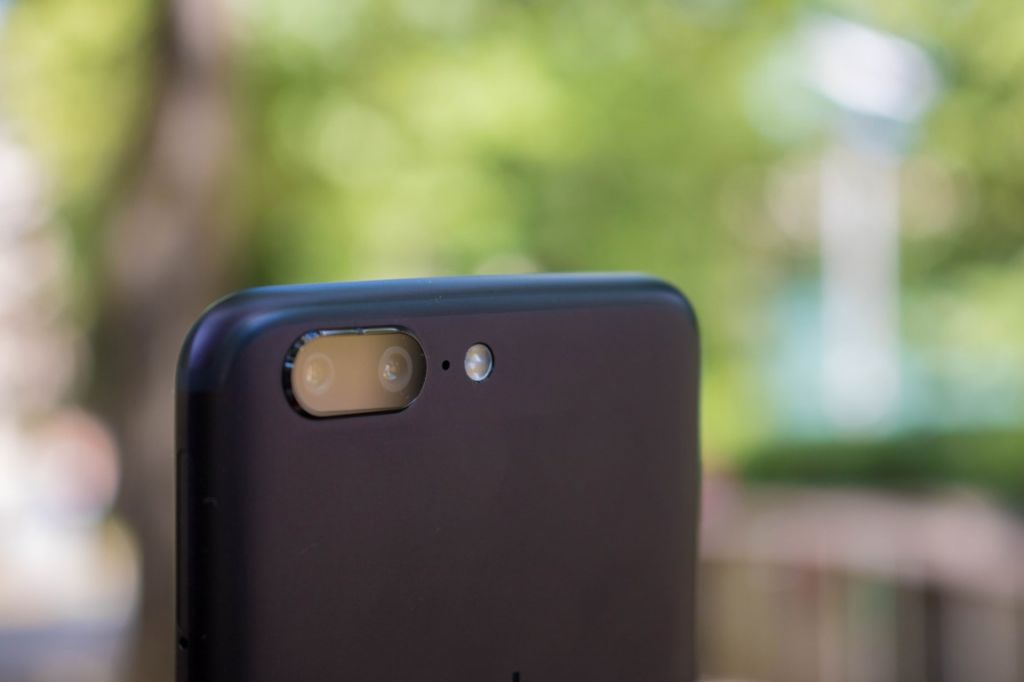
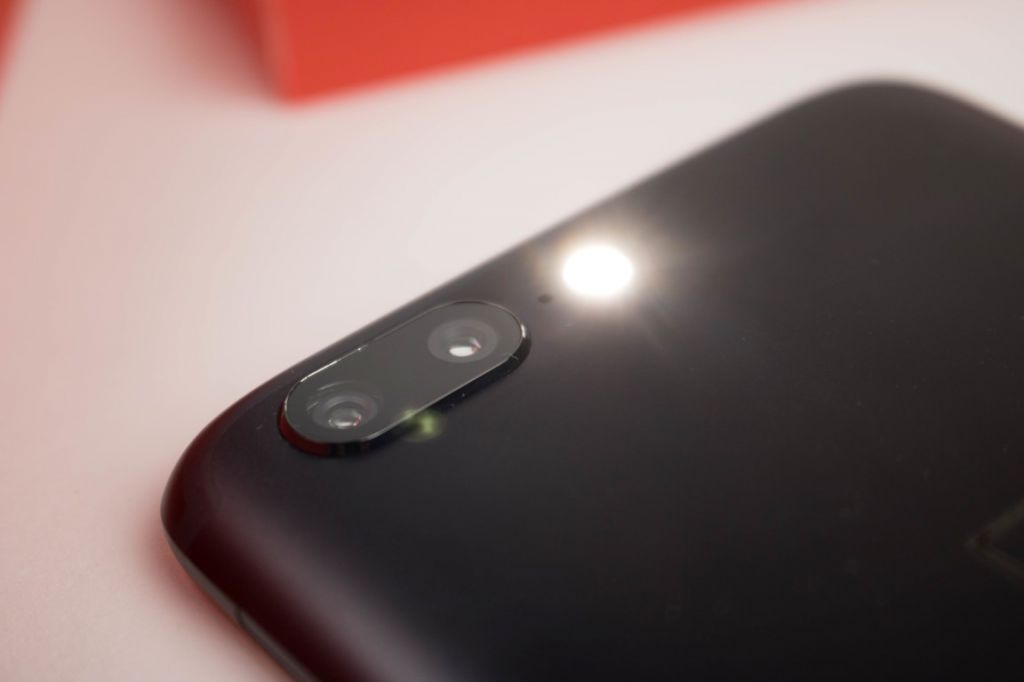
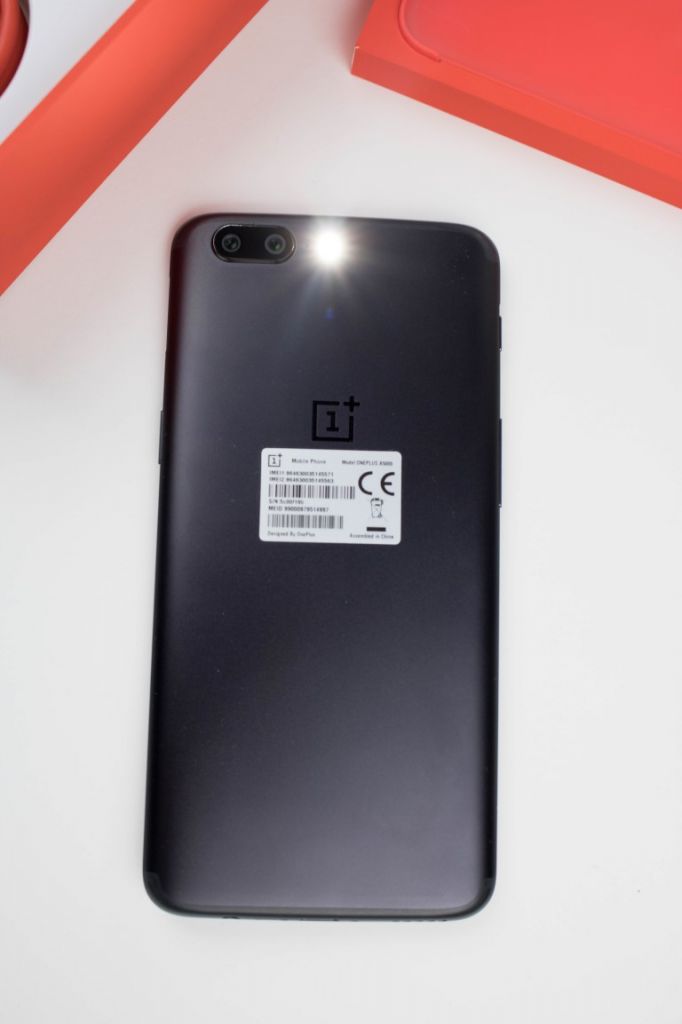
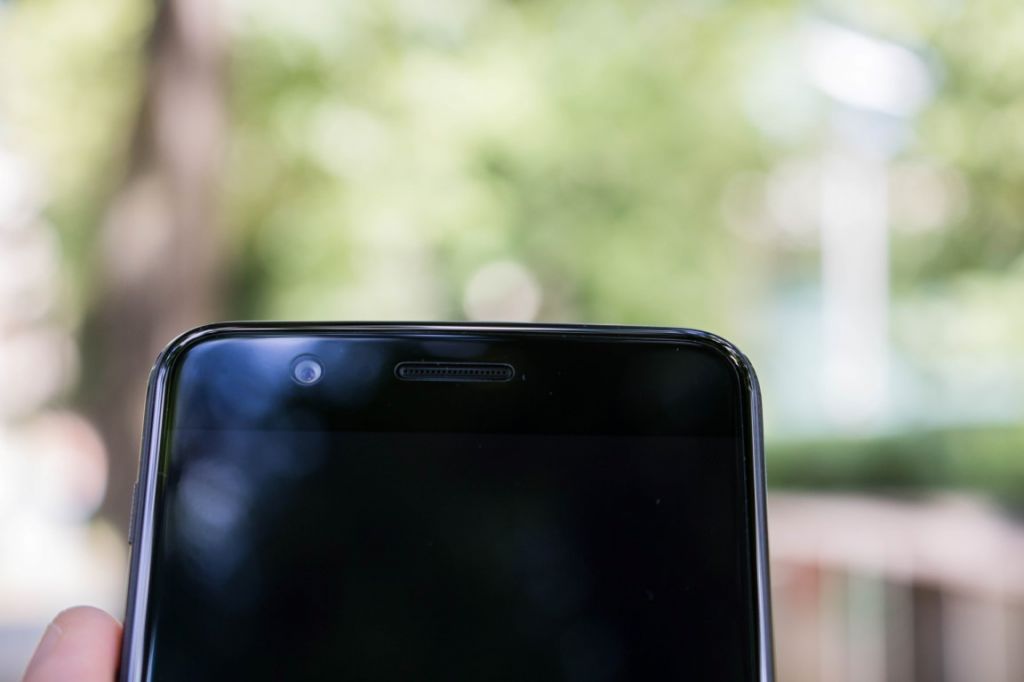
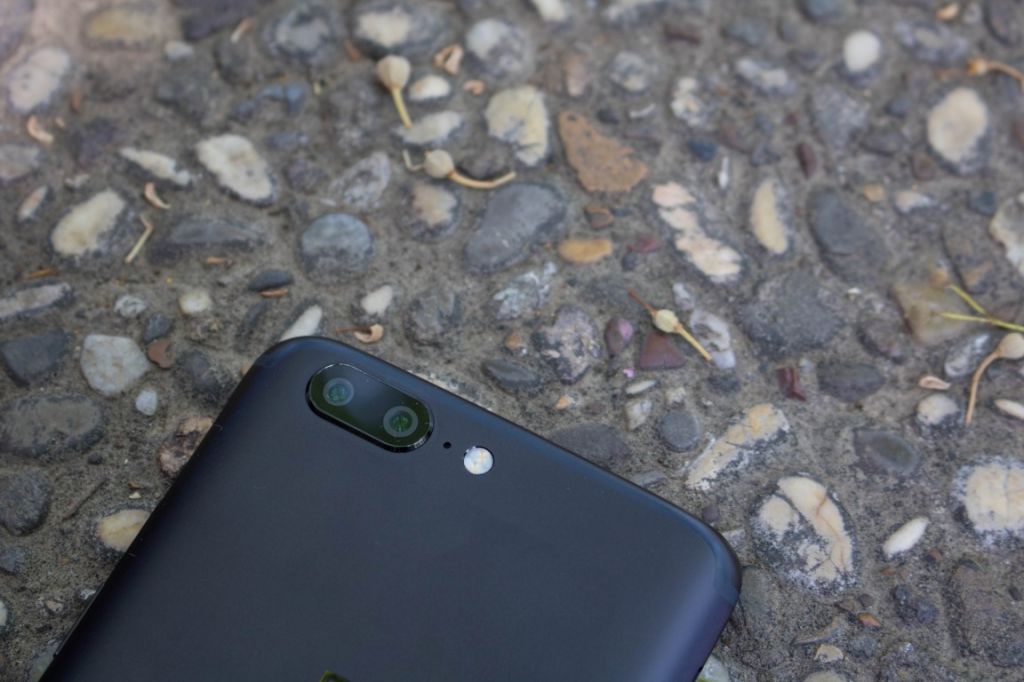
This time, like never before, the biggest accent was placed on the camera of the OnePlus 5. With this device, OnePlus has entered the race with other manufacturers who have implemented a dual main camera in their devices (Huawei, Apple…). In the OnePlus 5, we have a 16MP and a 20MP sensor on the rear. The 16MP sensor has bigger aperture and narrower angle covered, while the 20MP sensor, together with the 16MP one, serves to make images with the BOKEH effect. We had a chance to see this working on the iPhone 7 Plus. Phase Detection Auto Focus (PDAF) is supported, as well as the optical zoom up to 1.6x without quality drops. There is also the PRO mode which offers a lot of parameter settings, and can produce photos of DSLR camera quality. There are also: Geo-Tagging, Panorama, HDR and Face Detection. More in-depth camera specifications can be found on our website. Regarding the quality of the camera itself – we can only speak in superlatives. Colors are excellently reproduced, details are on an astounding level and the shutter speed is also up to the task. Portrait mode with the BOKEH effect is also very well done, but we have to give a slight advantage to the Apple’s iPhone 7 Plus which does a better job separating the focused and unfocused part of the photo. Video is captured in 4K resolution at 30fps, and this time, it’s been made perfect. Amazing details, with very fast auto-focus system and stable framerate – video material simply does not have any flaws. Next to the classic video capturing, Slow-Motion video is also supported. The front facing camera has remained the same as in the 3T, and has the resolution of 16MP, but this time it has EIS (Electronic Image Stabilization). Selfie photos made by the front facing camera are slowly but surely being placed on the very top. Video is, this time as well, taken in FullHD resolution at 30fps.

Connectivity
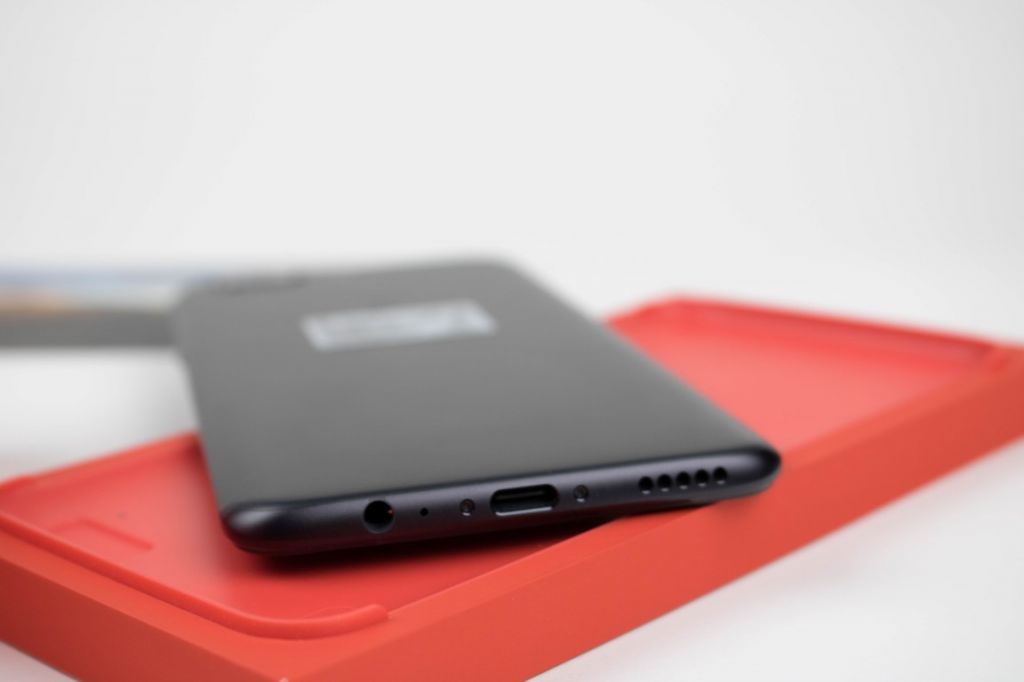
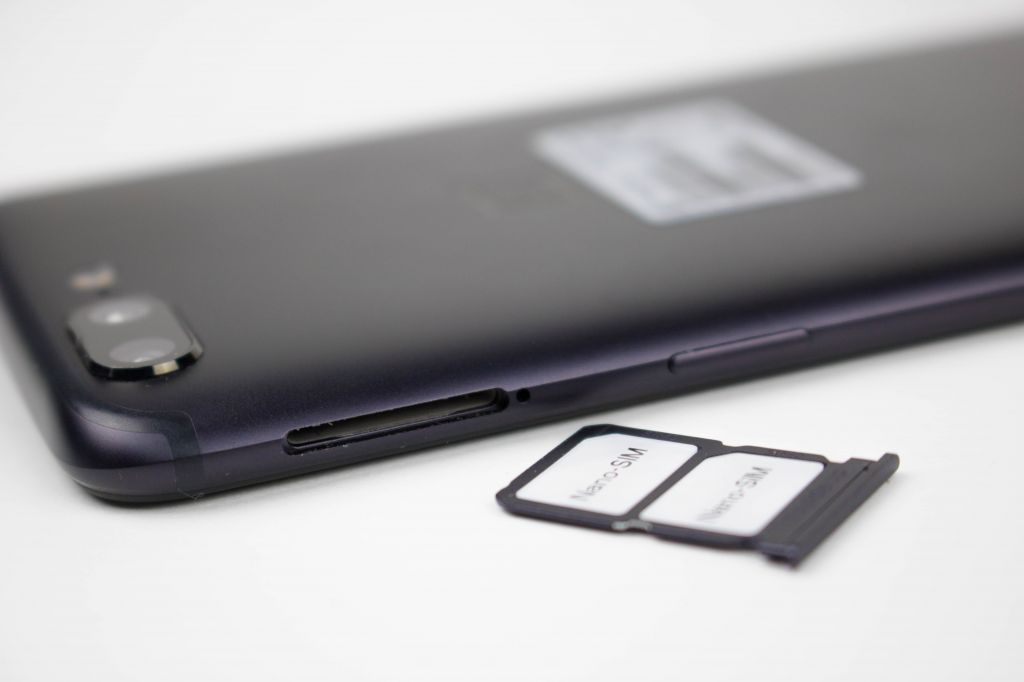
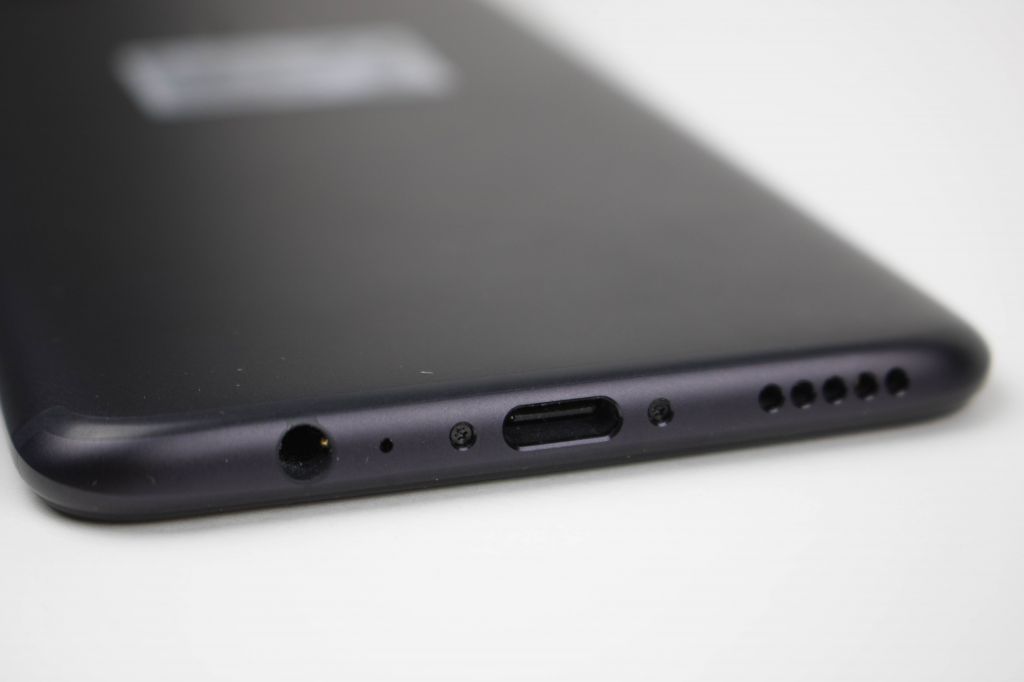
This device comes only in a DualSIM version. Both SIM cards are nanoSIM cards, and they can be placed in the same SIM tray. The reversible USB Type-C cable, which is standard since the OnePlus 3, is used for charging and data transfer. When it comes to wireless connections, the OnePlus 5 can boast with:
- WiFi 802.11
- BlueTooth v5.0 with the aptX HD system
- A-GPS
- NFC
- DLNA
- 3.5mm headphone port
Battery
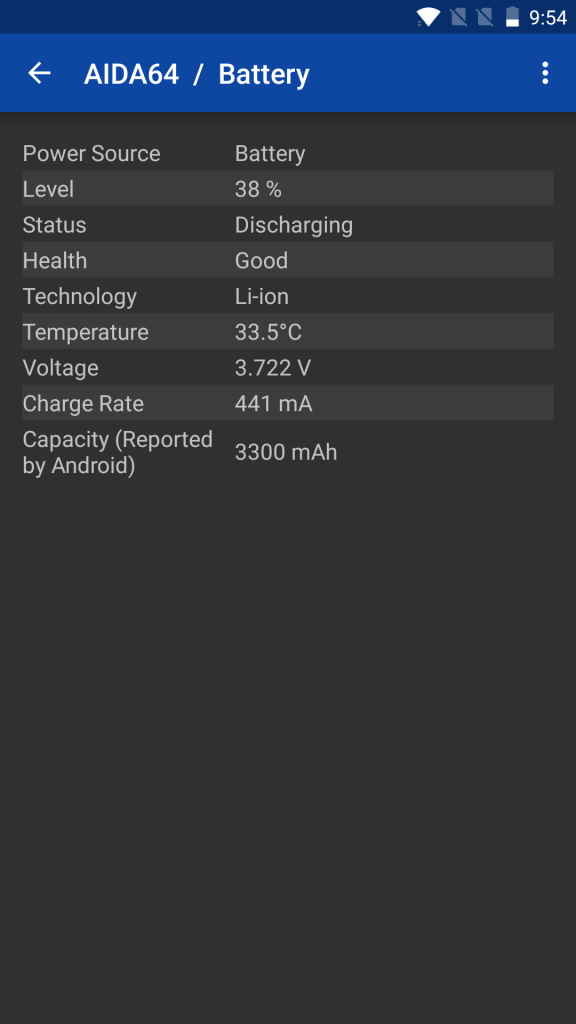
One illogical thing in the whole story of the OnePlus 5 is that this device has a 100 mAh smaller battery compared to its predecessor – the OnePlus 3T. It is a non-removable, Lithium-Polymer battery with the capacity of 3300 mAh. Battery shrinking can somewhat be justified with the smaller (10nm) process of the chipset. Dash Charge quick charging is present, and it offers a 60% charge in about 30 minutes. The advantage of the Dash Charge system is that, much the same as in previous iterations, all components needed for the quick charging are built into the adapter itself, so you can surf the web of play high demanding games while charging with no fear of overheating.
Final words
The inspiration for the OnePlus 5 was, with doubt – the iPhone 7 Plus. It is simply impossible not to compare these 2 devices due to their similar design and the same screen size. We repeat, the iPhone 7 Plus does a better job with Portrait photos (OnePlus 5 photos are far from bad though), and the screen of the 7 Plus is still a little bit better regarding the brightness. But, for the price, the OnePlus 5 provides excellent results and offers quite a lot.
Do you like the OnePlus 5? We’d like to see your opinion in the comment section below. If you have any ideas or you would like to see a specific device being reviewed soon, feel free to let us know here or on our Facebook page. If you liked this review, subscribe to our Youtube channel, like us on facebook, and sit back and relax while we make more of the same for you.